 China VIN Report
Used Car Exterior Inspection: How to Identify Body Panel Beating & Repainting, Scratches and Dents?
For overseas buyers, when sourcing used vehicles from China, gaining a full understanding of the vehicle's exterior condition is a critical step in making a rational purchasing decision. By…
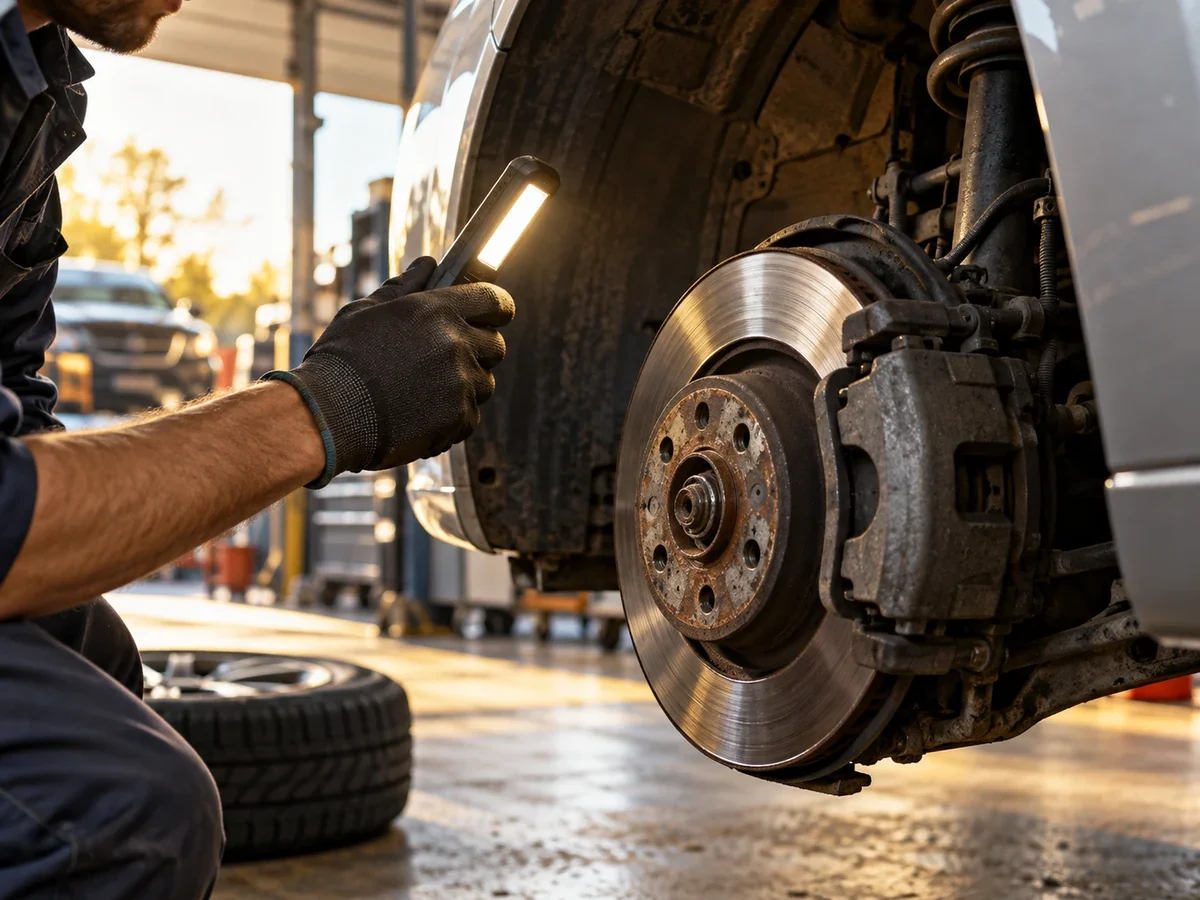
 For overseas buyers, when sourcing used vehicles from China, gaining a full understanding of the vehicle's exterior condition is a critical step in making a rational purchasing decision.
By measuring the paint film thickness of the entire vehicle, identifying body panel beating and repainting areas, as well as inspecting scratches and dents, buyers can gain a more comprehensive understanding of the vehicle's exterior condition and any potential repair traces.
For cross-border transactions, clear inspection reports and genuine vehicle photos help reduce the information asymmetry between buyers and sellers, and also enable buyers to more accurately assess the vehicle condition and subsequent refurbishment costs.
For overseas buyers who are unable to travel to China in person to inspect vehicles, detailed inspection records and authentic photos are particularly important.
Professional visual inspection mainly covers three aspects:
Measure the paint film thickness of the entire vehicle.
Identification of sheet metal repair and repainting locations.
Inspection of body scratches, dents and other visible damages.
1. Full vehicle paint film thickness gauge inspection
A paint film thickness gauge is a commonly used tool in the appearance inspection of used cars, which is mainly used to measure the thickness of the car body paint and help identify areas that may have been repainted or repaired with sheet metal.
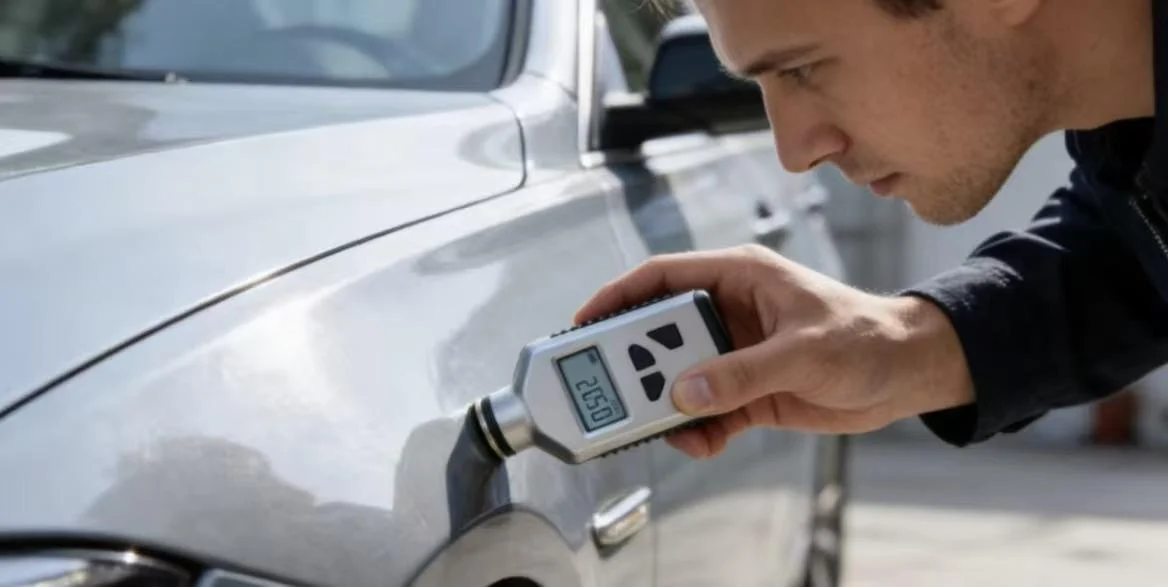
1.1 Measurement of Paint Film Thickness for the Entire Vehicle
Inspectors use a paint film thickness gauge to take multiple measurements on the metal body panels applicable to the vehicle.
The main detection sites include:
Hood
Left and right front fenders
front and rear doors
Left and right rear fenders
Trunk lid or tailgate
roof
Multiple locations on each panel shall be selected for measurement as far as possible to facilitate the comparison of paint film thickness differences between different areas, instead of making judgments based solely on a single measurement point.
1.2 Identify Repainted Surfaces and Sheet Metal Repairs
Variations in paint film thickness across different parts of a vehicle can serve as a reference for determining whether the vehicle has any traces of previous repairs.
Detection Result | Possible Reflections |
The readings at all positions are relatively uniform | The paintwork may be close to the original factory condition |
Local readings are significantly higher | Local repainting may be present |
The readings are abnormally high and unevenly distributed | Putty repair or metal sheet treatment may exist |
There is a significant difference in the readings of adjacent panels | Further examination is required |
It should be noted that the readings of a paint film thickness gauge cannot be used as the sole basis for judging a vehicle's accident history. There may be differences in the original paint film thickness among different brands, models and production processes. For body components made of different materials such as aluminum alloy, adaptive testing equipment is also required.
2. Sheet Metal and Painting Location Record
After completing the paint film thickness measurement, the inspector needs to further inspect the areas with abnormal readings and accurately record the specific repair locations.
Common test record examples:
Left front fender: Partial repainting is detected.
Right front door: There are signs of previous repainting.
Rear bumper: Repainting is observed.
Trunk Lid: Abnormal paint film readings, requiring further inspection.
Different types of maintenance require clear differentiation:
Maintenance Type | Specific Instructions |
Repaint | Re-spray the paint based on the original paint surface |
Sheet Metal Repair | Repair or restore the shape of the original body panels |
Component Replacement | The original body panels may have been replaced |
Repainting a vehicle does not necessarily mean it has been involved in a serious accident. Minor scratches from daily use, parking collisions and other similar incidents may also result in localized repainting.
If suspected sheet metal repair traces are found, further inspection should be carried out in combination with body seams, fixing bolts, internal structures, welding positions and other relevant parts.
3. Inspection of Body Scratches and Dents
Paint film thickness testing cannot fully reflect the exterior condition of a vehicle. Scratches, dents and other visible damages on the vehicle body surface also need to be inspected and recorded one by one.
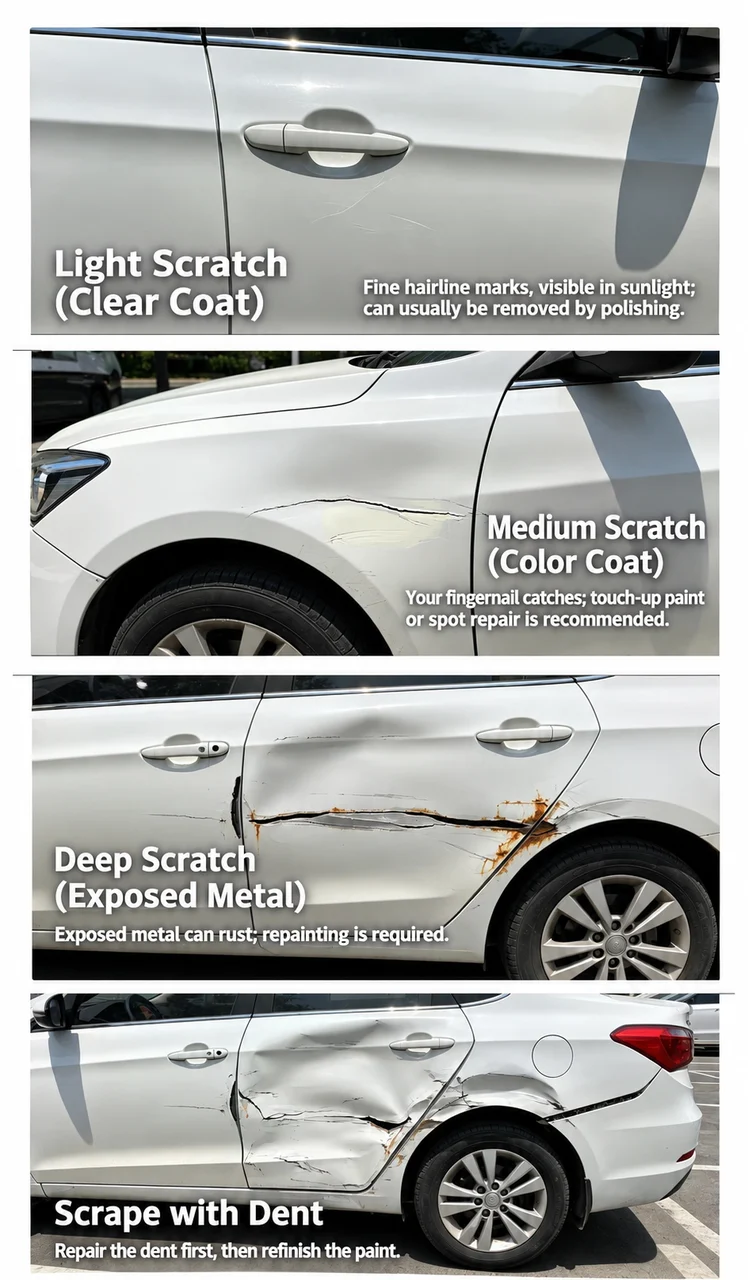
3.1 Scratch Inspection
Focus on inspecting the following parts:
Front and rear bumpers: Check for parking scrapes, surface scratches and abrasions.
Doors: Check for scratches caused by contact with other vehicles or objects.
Front and rear fenders: Inspect for paint damage and local scratches.
Side skirt: Check for scratches and wear on the undercarriage of the vehicle.
Rearview Mirror: Inspect the surface for scratches, damage and collision marks.
For deeper scratches, further observation is required to check whether the scratch has penetrated the clear coat, the base coat, the primer, or even exposed the metal substrate.
3.2 Dent Inspection
Inspectors shall observe the vehicle body surface from different angles, with key focus on the following checks:
Check whether there are local dents on the door surface.
Check whether there is collision deformation on the front and rear fenders.
Check whether there is irregular deformation on the hood and the trunk lid.
Check whether there are dents on the vehicle roof caused by hail or external force.
Check whether there is deformation or improper installation of the front and rear bumpers.
By observing under appropriate lighting conditions and from different angles, one can help detect subtle dents that are not easily noticeable directly.
3.3 Appearance Damage Record
After scratches, dents or other appearance issues are found, the specific location, type of damage and approximate scope shall be recorded, and corresponding photos shall be taken.
For example:
Examination Site | Damage Type | Inspection Record |
Left front door | Scratch | There are minor scratches on the surface |
Right Rear Door | depression | Small-area depressions exist in some local areas |
Front Bumper | abrasion | There are obvious scratches on the surface |
Trunk lid | Paint surface damage | There is damage to the local paint finish |
4. What should a complete visual inspection report include?
To help overseas buyers understand the condition of the vehicle more efficiently, it is recommended to organize the exterior inspection results into a standardized report.
Test Item | Main Recorded Content |
Overall Appearance | Overall photos from front, back, left and right sides |
Film thickness | Specific readings for each detection site |
Painting Status | Painting Location and Scope |
Sheet Metal Repair | Repaired Site and Related Examination Results |
Scratch Condition | Scratch Location, Size and Severity |
Depression | Location, Appearance and Photos of the Dent |
Other Injuries | Damage to bumpers, rearview mirrors and other exterior components |
The inspection report shall be based on the actual inspection results. The identified problems shall be truthfully recorded, and no definitive judgment shall be directly made for the maintenance history that cannot be confirmed.